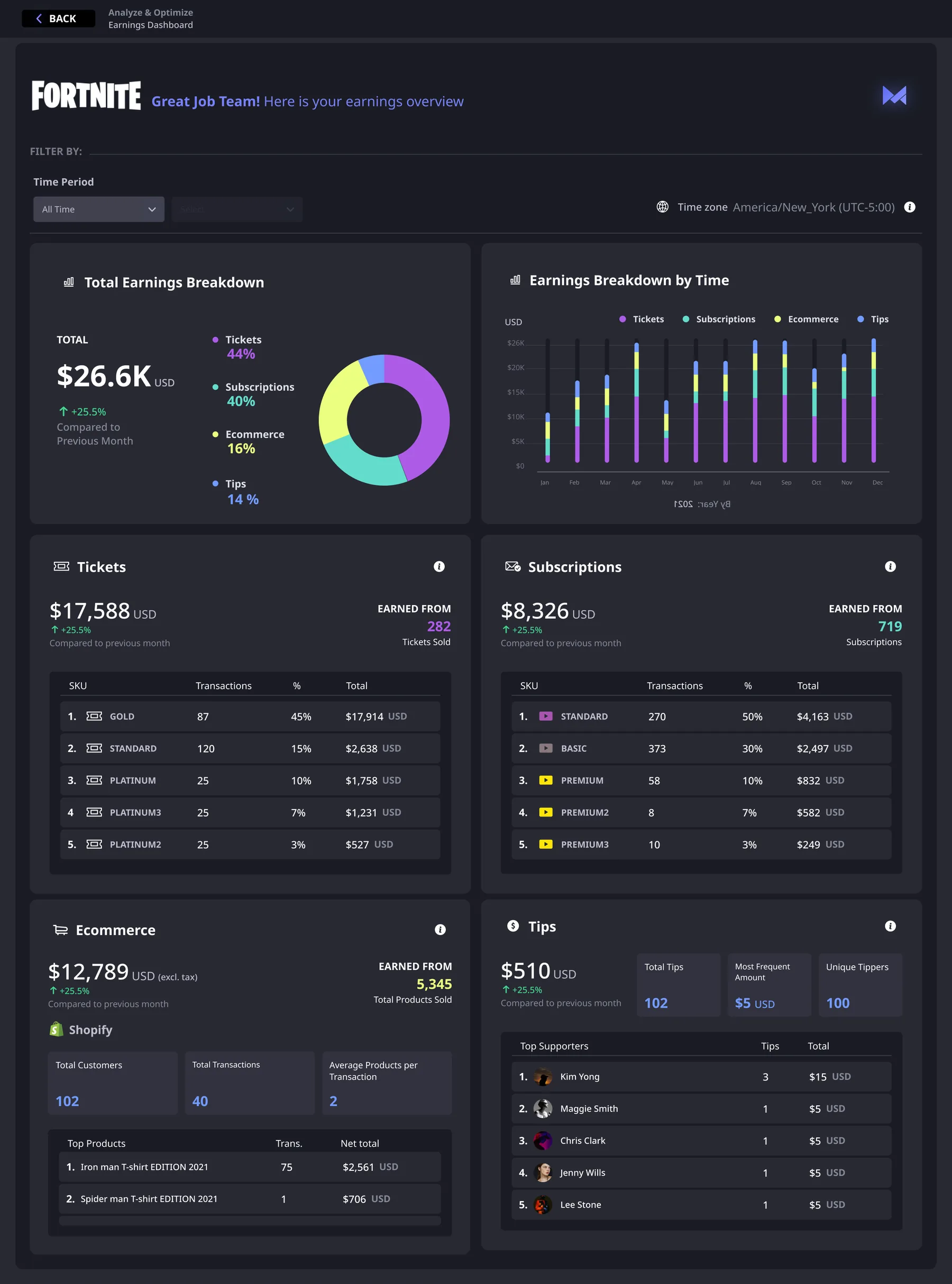
Earnings dashboard: a full breakdown by revenue stream, tailored per client, replacing what used to be a very basic view.
Protected Case Study
This case study is password protected. Get in touch if you'd like access.
Contact me for access →An interactive live-streaming platform used by individual creators and by brands running large-scale events. A full platform redesign, a native broadcasting product that replaced third-party software, and the UI Kit that tied it all together.
Earnings dashboard: a full breakdown by revenue stream, tailored per client, replacing what used to be a very basic view.
Maestro is an interactive live-streaming platform for creators and brands looking to engage and monetize audiences. It served two very different kinds of users under one platform: individual creators, artists, and influencers running their own shows, and companies and brands producing concerts and large-scale events. Each had different needs, but both needed to go live, engage an audience, and get paid for it.
The first problem was not the product itself, it was that nobody understood it. Maestro's marketing site did not clearly communicate how the platform worked, and potential customers could not tell what they were signing up for. That got fixed first, and it opened the door to a much bigger project.
The redesign work led directly to being hired for the platform itself: the marketing site's success was what got Maestro to bring the work in-house. From there, the challenge was building a system flexible enough to serve every new vertical that emerged as live streaming exploded, concerts, influencer shows, and corporate events alike, without fragmenting the experience.
The process shifted depending on the project. Understanding the platform's different verticals and how differently each type of client, individual creators versus brands, needed to use the product required real research up front. But once the pandemic drove rapid growth across the platform, the team had to move fast, iterating in high fidelity directly with engineering rather than waiting on a long research phase.
Owning the UI Kit throughout meant every new product, Maestro Studio, the analytics dashboard, new verticals, was built on the same foundation instead of drifting into its own visual language.
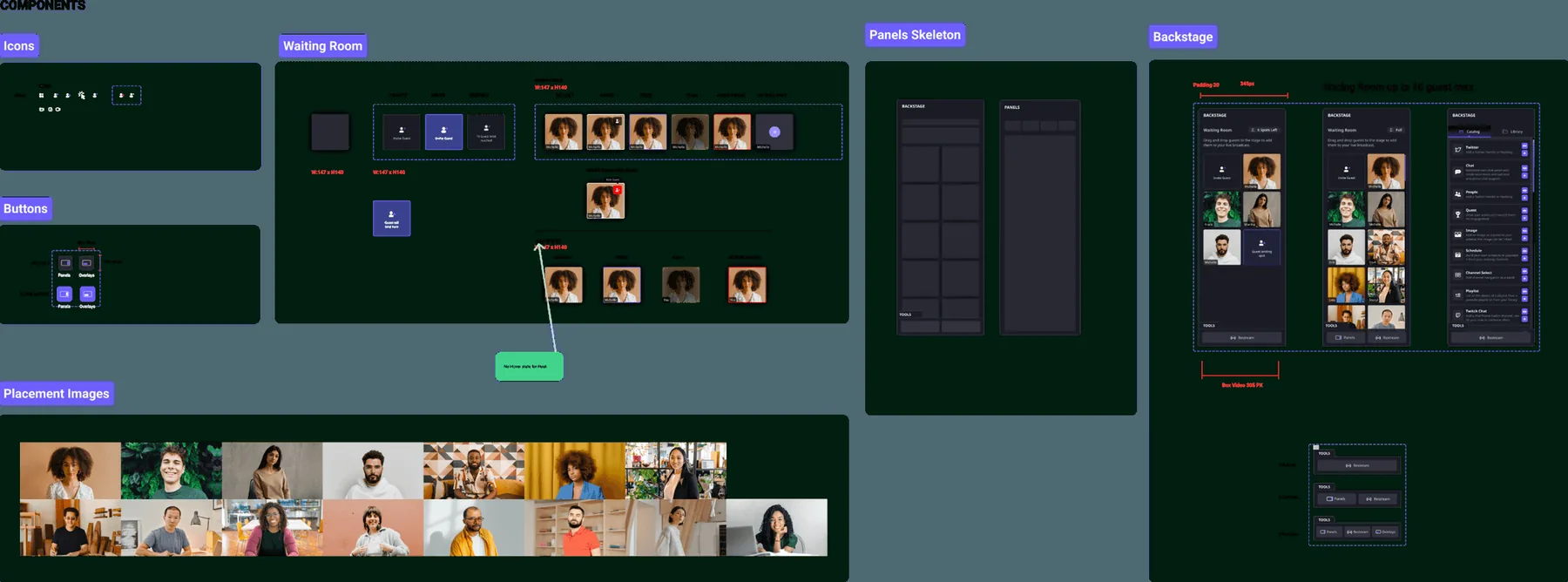
The UI Kit: standardized icons, buttons, and component states, built to scale across every new product on the platform.
Before Maestro Studio, going live meant setting up OBS or similar third-party software, a real barrier for creators who just wanted to make content. Maestro Studio integrated broadcasting directly into the platform: a waiting room to bring guests on stage, a live backstage view, and native panels for chat, polls, trivia, raffles, and Shopify, all built as a single flow instead of separate tools bolted together.
I owned the design decisions end to end: component architecture, the desktop and mobile prototypes, and integrating the newly built UI Kit into every screen.
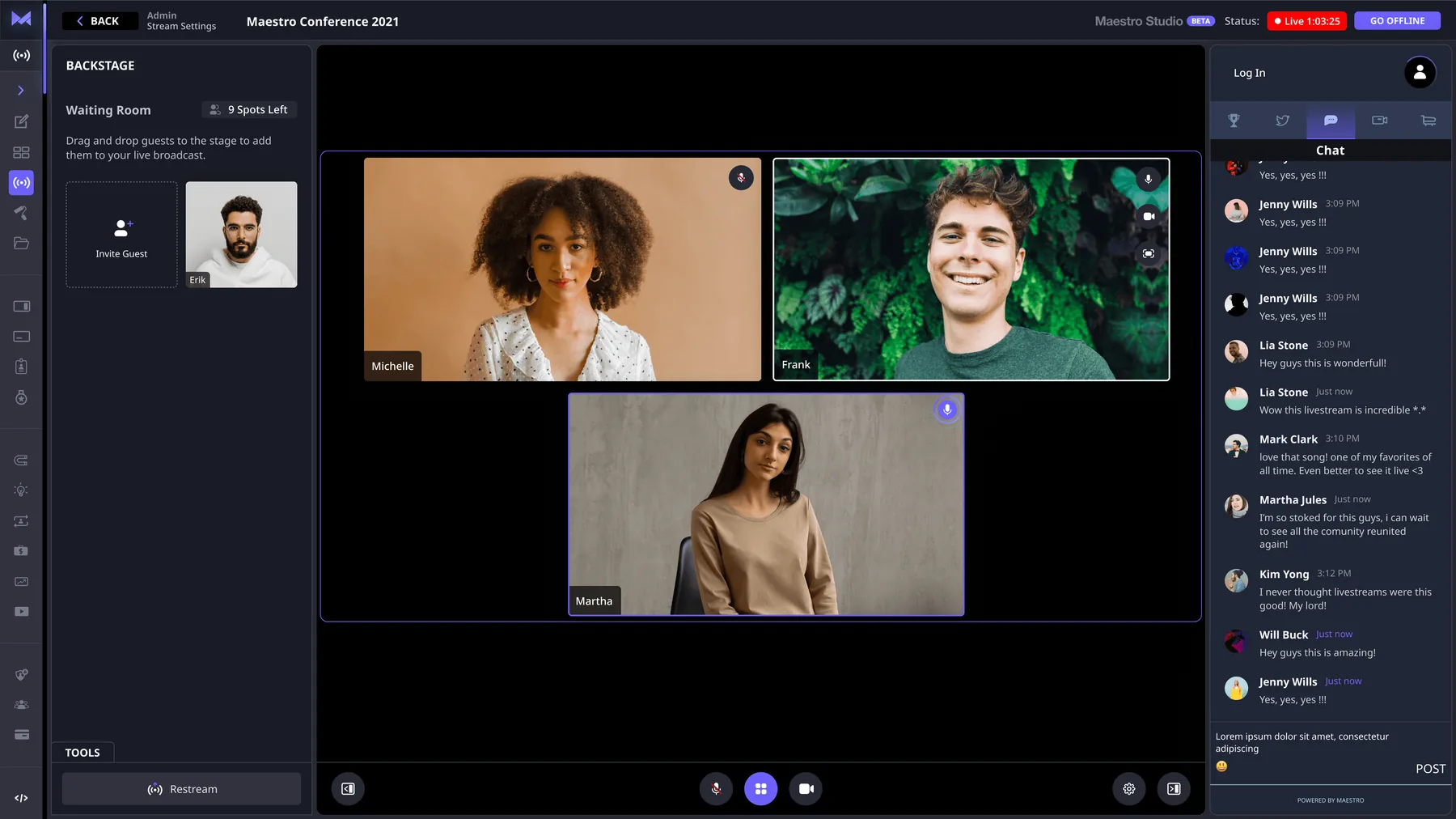
Host view: waiting room, live stage with multiple guests, and audience chat, all managed from one screen.
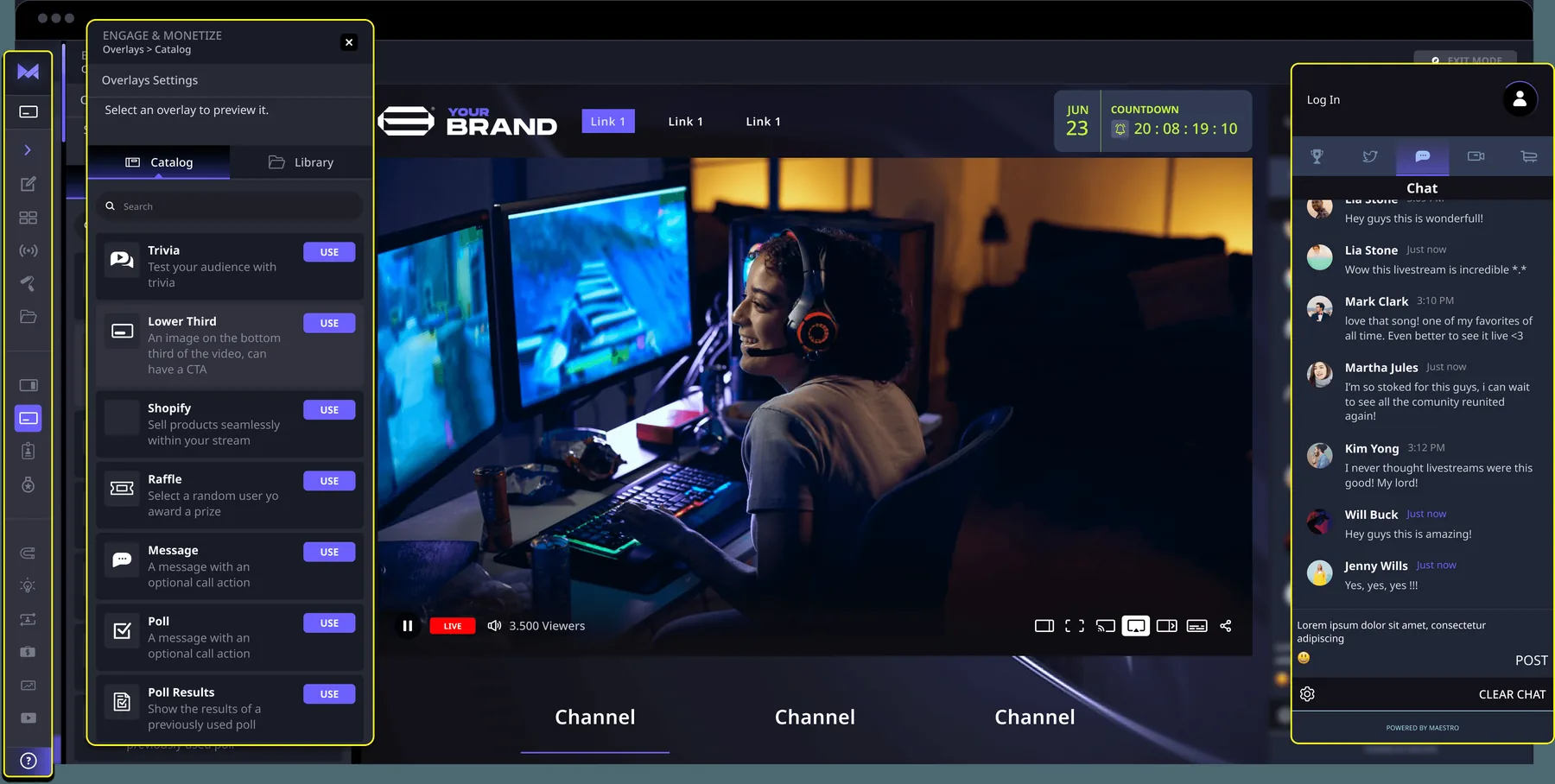
Engage & Monetize overlays: trivia, product drops, raffles, and polls, dropped directly onto the live stream.
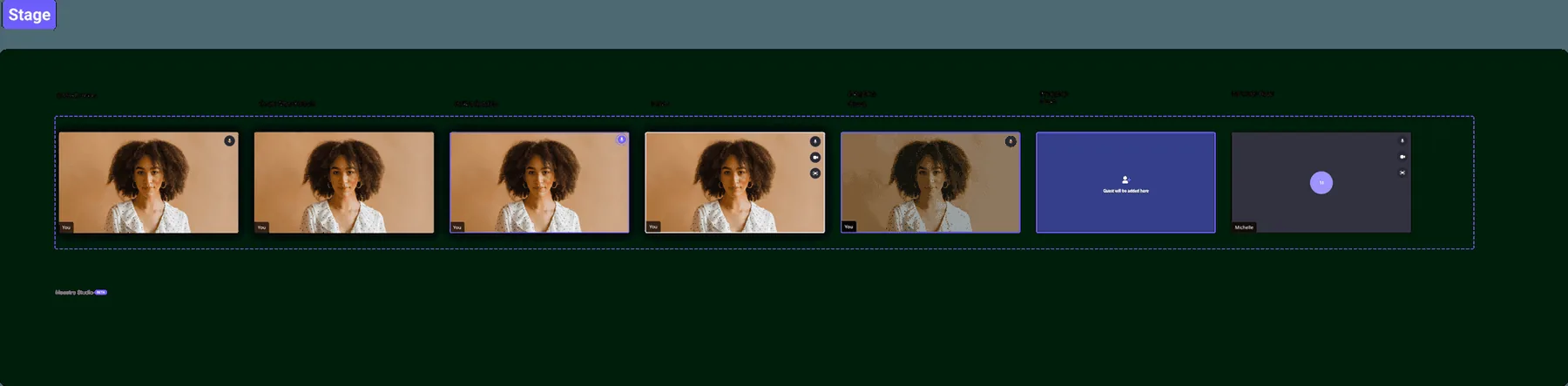
Every stage tile state was designed on its own, from active speaker to dragging a guest into place to a dropped video feed.
A platform rebuilt from the ground up to serve both individual creators and enterprise brands, anchored by a UI Kit that let every new product, Maestro Studio, the analytics dashboard, new verticals, ship consistently. The platform went on to work with some of the biggest names in entertainment and sport, and the business results followed the redesign.